DON'T SPRAY ME, BRO

AI;DR: (AI; Didn't Read) -- I saw posted on Hacker News a story about a new, supposed "universal respiratory disease vaccine nasal spray". This was something that in mice kept the innate immune system active for months instead of days at a time and helped the mice fend off coronaviruses, flu and house dust mite protein allergies much better than the baseline. The research is out of Stanford, with human trials forthcoming. I am dubious of the safety of this approach. So I recruited help from DeepSeek & Perplexity & Gemini Pro & the Hacker News comments section to look into potential risks. At this point, the cynic in me expects the FDA to approve this new drug whether it's safe or not; so tell your friends and family not to take it, is my two cents.
Recent developments in immunology have introduced a highly experimental compound known as GLA-3M-052-LS+OVA, which is currently being positioned as a potential multi-purpose or universal vaccine for humans. Developed by researchers at Stanford University, this prophylactic nasal spray is designed to offer broad-spectrum protection against a wide array of respiratory threats. Instead of requiring separate shots for different seasonal illnesses, developers envision a future where a single nasal formulation could theoretically defend against viruses like coronaviruses and influenza, bacterial infections, and even seasonal allergens all at once.
The name of the compound reveals its complex, biomimetic structure. It consists of GLA, a synthetic Toll-like receptor 4 agonist, and 3M-052, a Toll-like receptor 7 and 8 agonist, both of which are potent immune-stimulating adjuvants. These are combined in a stable liposomal formulation to safely deliver the components directly to target cells. Finally, the OVA represents ovalbumin, a harmless egg protein commonly used in laboratory research as a model antigen to provoke a measurable and trackable immune response.
Unlike traditional vaccines that work by training the adaptive immune system to recognize and attack one specific pathogen with customized antibodies, this experimental approach relies on a radical departure from conventional design. It targets the innate immune system, which serves as the body's first, generalized line of defense against all invaders. The synthetic adjuvants in the formulation directly stimulate innate immune cells, particularly the macrophages situated strategically throughout the respiratory tract.
The inclusion of the ovalbumin antigen plays a crucial, unconventional role in this biochemical process. Its primary job is to recruit adaptive T cells into the lung tissue. Once there, these T cells release chemical signals called cytokines that essentially hack the local innate immune cells, keeping the macrophages on a prolonged amber alert status. While a typical innate immune flare-up normally fades after just a few days to protect healthy tissue, this engineered cross-talk sustains a heightened state of readiness for much longer periods.
Preclinical trials involving mice have yielded highly dramatic early results. When researchers administered the formulation as a simple nasal spray in multiple doses, the mice successfully fought off lethal exposures to various coronaviruses and influenza strains. The sustained innate immune response resulted in a massive reduction of viral load in the lungs, dropping it up to one thousand-fold compared to untreated subjects. Furthermore, the vaccinated mice displayed similar protection against severe bacterial lung infections, easily surviving exposures that caused rapid weight loss and death in the control groups.
In a surprising application, the researchers also tested the formulation against common environmental allergens to see how broad the protection could truly be. They exposed the mice to house dust mite proteins, which normally trigger a massive allergic response marked by asthma-like airway inflammation and heavy mucus buildup. The vaccine effectively quelled this allergic reaction and kept the airways of the treated mice completely clear, expanding its theoretical utility from fighting infectious diseases to actively modulating airway hypersensitivity.
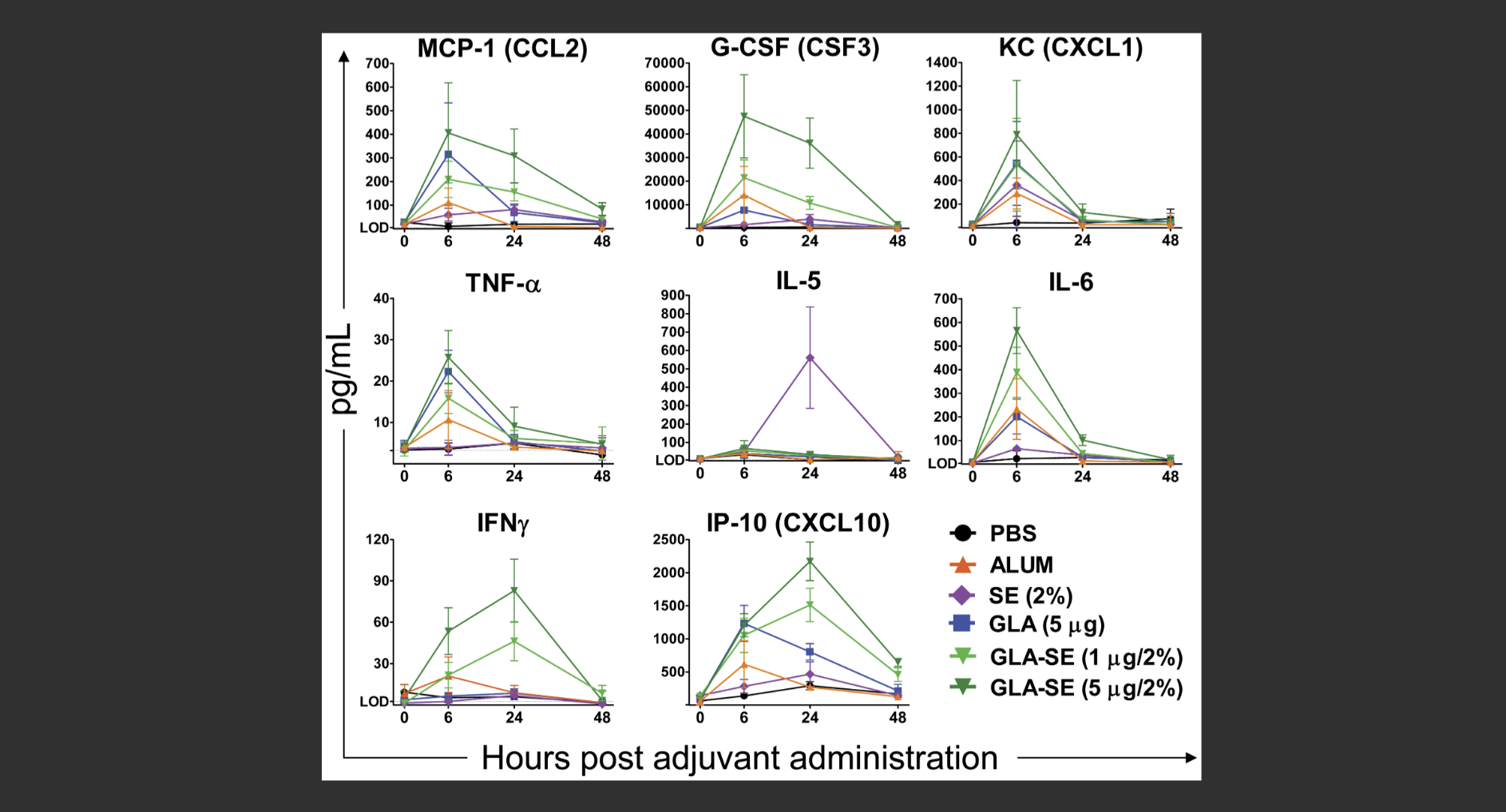
Despite these exciting laboratory results, transitioning this concept to human trials carries significant theoretical risks based on well-understood aspects of human immunology. The primary concern is the danger of persistent inflammation, as keeping the innate immune system perpetually activated could easily trigger severe hyperinflammatory reactions or a cytokine storm. Such an abnormally sustained state of alert could result in chronic tissue damage in the delicate structures of the lungs or cross the line into an autoimmune disease, where the confused immune system begins attacking healthy host tissues.
Another substantial risk involves the specific physical ingredients and the localized immune structures they artificially create. Using ovalbumin in a nasal spray designed to aggressively attract immune attention carries the ironic risk of inducing a severe egg allergy in human patients rather than preventing one. Additionally, engineered biological cross-talk can lead to the formation of ectopic lymphoid structures, where immune cells permanently set up camp and refuse to disperse, raising serious questions about long-term pulmonary conditions or heightened cancer risks from chronic cellular turnover.
Ultimately, while the concept of a singular, broadly protective nasal spray is incredibly appealing, human evolution operates with a resting immune state for vital reasons. A perpetually hyper-vigilant immune system rapidly drains bodily resources and exponentially increases the likelihood of devastating friendly fire against the body itself. Until rigorous and transparent human trials can prove that these intense, artificially induced immune states resolve safely without causing autoimmune or allergic casualties, this universal vaccine approach remains a fascinating but highly risky laboratory concept.
References:
- https://med.stanford.edu/news/all-news/2026/02/universal-vaccine.html
- http://www.bbc.com/news/articles/cx2g8rz7yedo
- https://synapse.patsnap.com/drug/a07a38b7ad0b4c0fbb83f0dd0efb2700
- https://journals.plos.org/plosone/article?id=10.1371%2Fjournal.pone.0051618
- https://www.frontiersin.org/journals/allergy/articles/10.3389/falgy.2025.1633293/full
- https://www.frontiersin.org/journals/immunology/articles/10.3389/fimmu.2020.559382/full