Relative Peace to Relative War

I grew up in a time of relative peace in America. My halcyon years as a kid were basically the tail end of the Soviet Union to right before the War on Terror began with 9/11. (Some would call this period the Decade of the Peace Dividend.)
My parents were pacifist liberals who never talked about war. Although my grandfathers and other relatives served in the military. And my Mom (RIP) was willing to join the Army to help her fund medical school.
I don't recall the "Evil Russians" ever being discussed when I was a kid. I didn't live through the 1970's Oil Embargo. There were no earth-shattering global events that impacted me directly as a kid. Nothing until 9/11.
At that point, I was also a pacifist liberal, as that is how I was raised. So I wondered along with my progressive global studies teacher in high school that year how we could reconcile Islam as the "Religion of Peace" with the terrorist attack that took innocent lives on American soil. I had no answer or informed commentary at all at the time to George W. Bush's decision to enter the Graveyard of Empires – Afghanistan – to pursue the badies.
After high school, while volunteering in the countryside in Nicaragua, I recall getting word that Bush was talking about some Weapons of Mass Destruction in Iraq that had supposedly been found. I knew immediately upon hearing this that he planned to go to war in Iraq. I said as much and the three other Americans with me at the time scoffed: "You're crazy. That's not what this is about." But I was just cynical enough at 18 to know with high certainty that this was, indeed, the plan.
In my first year of college, I attended protests against our involvement in Iraq. I remember during spring break at the airports all the TVs were blaring on about our heroic efforts to dismantle Saddam Hussein's regime there. There was no solace or peace to be found. The War on Terror was turned up to 11. The Department of Homeland Security, the name of which me and my liberal friends of the day derided as "all too Nazi sounding", kept the nation on edge with their color-coded alerts. Orange was the only option, it seemed.
By 2005, it felt like all was well again in the rules-based international order. Nothing perturbed me, at least, in my cozy college navel-gazing environs. I freely wandered barefoot without glasses on contemplating the Tao that cannot be defined, and trying on Buddhism for size, and grappling with Nietzsche and Existentialism, as was fashionable for a modern university hippie to do at the time.
What loomed ahead was a Global Financial Crisis. Nothing too disturbing for me. Depressing maybe, not the least for my job prospects leaving school into the depths of that deflationary period. But it was not "earth-shattering" in any way. I eventually got my first real job teaching in Turkey in 2009.
Being there teaching English and Drama and Japanese Club for three years really helped to ground me. There people were more conservative, insular, and religious than I was used to. They were also very kind and caring. This impacted me and guided me towards God slowly, and towards conservatism just a bit. I appreciated Family and Faith and Nation more as concepts. Finally, I was growing up.
Through an acutely rocky and suffocating relationship and out the other side back home ("stateside"), I found such tantalizing topics as Bitcoin and Libertarianism and Free Markets over which I could obsess. The force of these and my love for technology (I was a dot-com nerd kid, if you recall) pushed me to leave teaching and pursue programming as a path. It was still the quiet days pre-Trump at this time. By mid-2016, I had fully exited teaching and joined tech, to start as a support technician at an Enterprise Server/Systems Integrator/HPC company.
Trump was really the next exciting thing that happened in the world, from my standpoint. I watched and played around on Reddit and Twitter and saw him trending up and up. I found it hilarious how he mocked the Liberal Rules-Based Order of the Democrats, how he desecrated their Swamp.
Because I was a Libertarian at the time Trump was coming to prominence, I was not keen on his Trade Policies. The notion that we should put tariffs on Chinese goods was foreign to me. I had actually visited China with a group of teachers in 2015, and found Chinese people markedly friendlier than the Japanese, with whose culture I was much more familiar. I basically had no problem with China on the whole, and favored Free Trade. Looking back now, I find my old bias internally logically consistent with Austrian Economics and Libertarian principles, but perhaps irrational, in that now we find China is a real, tangible threat to American dominance in a number of domains (think rare-earths and critical materials midstream processing and refinement).
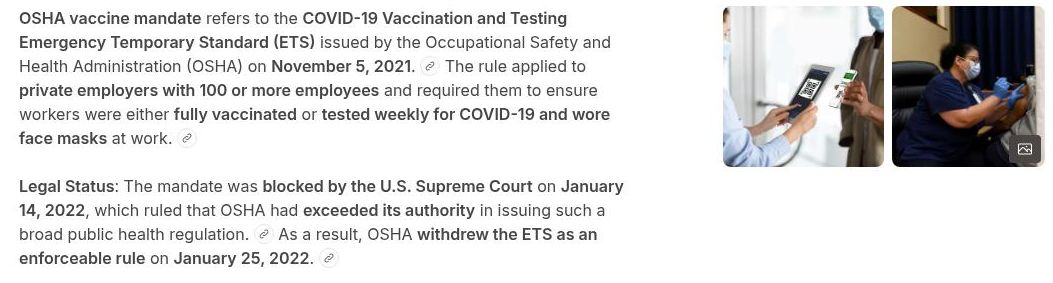
Because I hated Biden and his crew for stealing the 2020 election, and resented him and his OSHA cronies for trying to force experimental vaccines on all the American wage slaves, I was schadenfreude-laden and perhaps perversely overjoyed at Putin upsetting the apple cart of global affairs when he invaded Ukraine. Not that I wanted War. But it is a reality of our world.
At the time, I was about to be banned from seeing large numbers of family members at a reunion because one of my cousins set herself as Karen-Dictator and was going to demand that everyone present their Gene Therapy Guinea Pig card before giving anyone else a hug. For my own reasons then, I was glad to see that Biden-Atlantic consensus shattered, at least momentarily. (The masks were off, quite literally!)
Now four years on, the Russia-Ukraine War continues. No doubt people on both sides have suffered immensely. This is war. The ugliest of human affairs. I think my parents were glad to not have to talk about war at all for so many decades post-Vietnam (and perhaps were tired of hearing from their parents about WWI and WWII and the Korean War and so on).
But this is life. Rose-colored glasses don't stem the tide. Power-mongers gonna power-monger. I was privileged that I never faced violence directly or conscription during my years as a young man. But I see the value in reading and understanding history, examining current trends and events, and preparing for the future.
Recently, I started listening to School of War, the podcast. It's been helpful to understand things like the capture of Maduro, past military interventions and military strategy more broadly. For a few years longer (since COVID really), I have been listening to the Northern Miner podcast and taking in the explorations there of Resource Nationalism as a theme.
Notably, I listened to School of War episode #268: "Seth Jones on America’s Defense Industrial Crisis", and then read his book, "The American Edge: The Military Tech Nexus and the Sources of Great Power Dominance". Jones argues that the United States is on a trajectory toward failure in deterring major adversaries like China, because our Defense Industrial Base operates on a peacetime footing, despite escalating global threats.
The book demonstrates how the United States, and certain innovative companies, have been critical to industrial production from the 1930's to today. Examples of traditional defense companies that innovated were Boeing with its B-29 bomber, and Lockheed Skunk Works' development of stealth fighters and other cool jets (U-2 Dragon Lady, SR-71 Blackbird, F-117 Nighthawk). It includes coverage of modern engineers and entrepreneurs in the defense sector that are having an impact today as well, like Elon Musk of SpaceX/Starlink and Palmer Luckey of Anduril. And it provides a good overview of the rise of China as a defense industrial power, concluding that China is fully on a “wartime footing”.
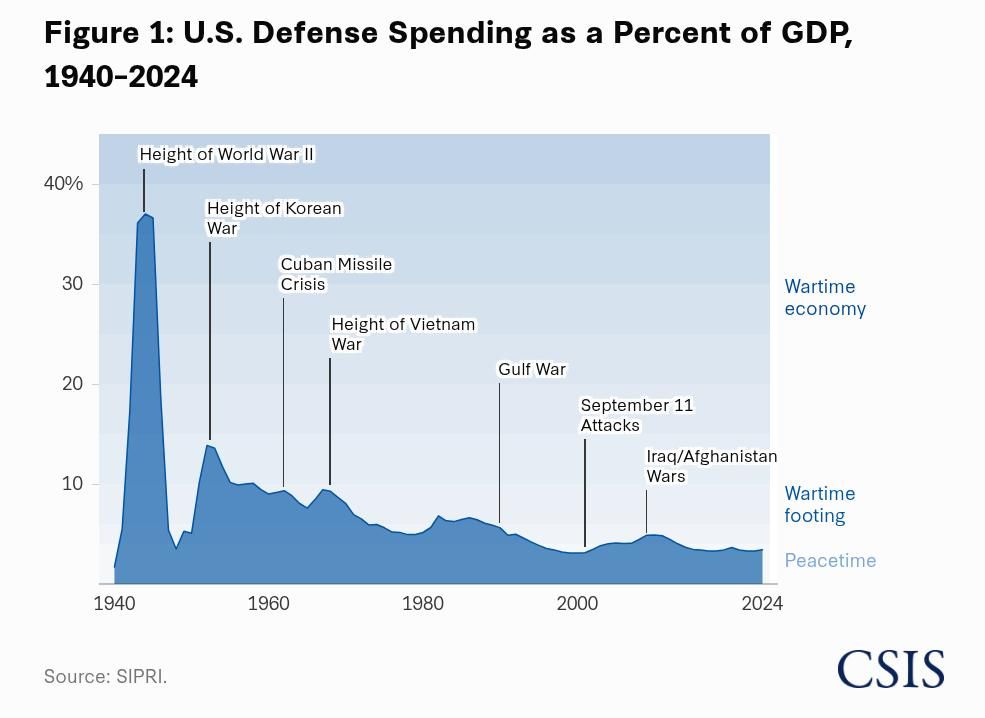
One marker of the U.S.'s peacetime footing is low spending on defense as a percentage of GDP. Currently around 3.5% is budgeted, whereas often in wartime spending has ranged between 5-15%.
The younger peacenik libertarian in me would have balked at the implication that we need to spend more on defense and weapons and bombs and fighter jets and drones and the like. Because clearly no one has attacked us. Right?
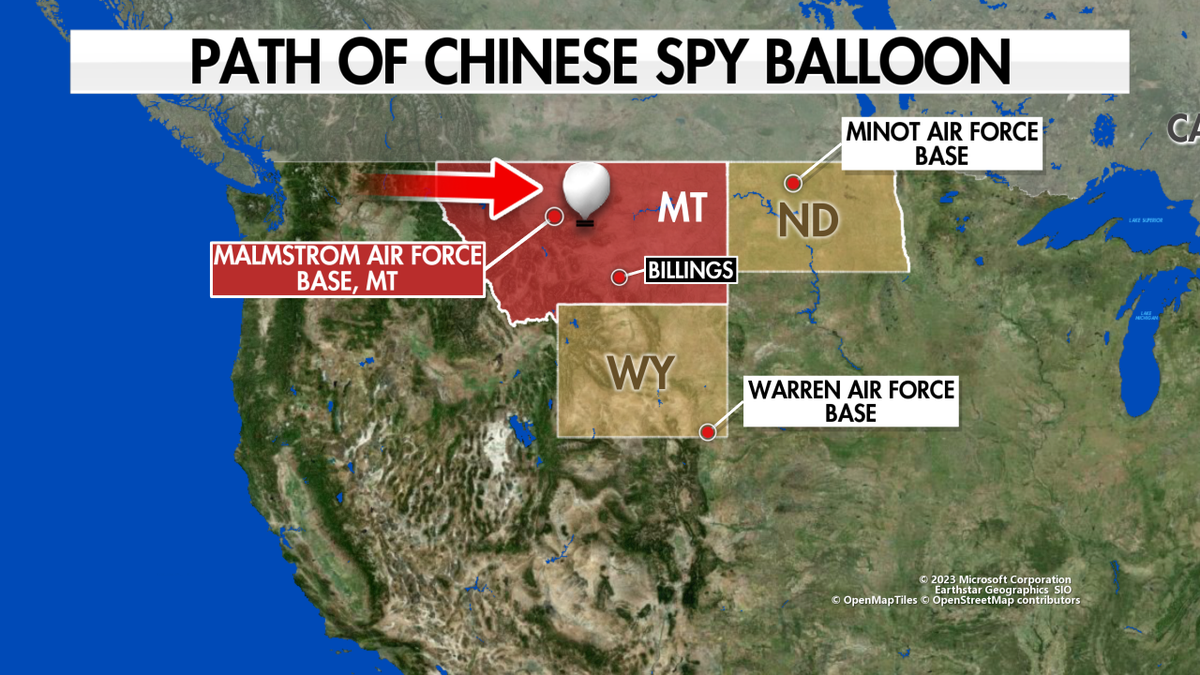
But China and the U.S. are in a Trade War already. And China has threatened (promised) to eventually take Taiwan. And with AI and Chips so vital to our economy we could not afford to lose TSMC in Taiwan or expect to thrive with production of chips suspended for a long time. Samsung and Intel seem unlikely to take the throne and US-based TSMC production is a sliver of what is consumed currently.
So there may be a "there there" when it comes to all this wartime footing talk.
The U.S. just recently reauthorized manufacturing of TNT on U.S. soil after four decades of not making any. Odd to think about how America wasn't making its own TNT... It sounds obvious that you'd want to make your own, or not have your (potential) enemies make 100% of such materiel for you, right? (Congrats to Repkon USA of Graham, Kentucky for winning the contract!)
Reading Craig Tindale's Substack would have one believe we are on the brink of total catastrophe not having enough scandium for our aluminum-scandium alloys to build military drones, or enough antimony for our munitions, outside of what is produced by China. But what is an individual to do here?
You could invest in Sumitomo Metals of Japan that makes some few tons of Scandium per year, or Perpetua Resources of Idaho that is reopening an old Antimony mine soon™, or buy one of the two American public rare earths companies. But these stock bets are like a monkey throwing darts blindfolded. Throw a thousand, and one may hit a bullseye, sure. But what should the real takeaways be for an American reading the Tindale's and the Seth Jones' of the world?
To be honest, I am not entirely sure yet. But it helps to write out the precepts, I believe...
These are the partially-formed concepts, the starting points I have now, that I never could have imagined possessing in my 20's:
- War is a fact of life. It ebbs and flows over the decades in a given region of the world.
- The Nature of War also shifts over time, adding new dimensions while old approaches remain. See the shift from 'maneuver warfare' to 'asymmetric warfare' to 'cyber/psychological warfare' (5GW).
- It helps to have a balanced perspective about what is possible and what is rational to expect may happen in the course of world events.
- Decisions are not made in a vacuum, but are heavily constrained by the exigencies of the time, as well as the operative cultural and political frameworks of the parties involved. Consider: Why were Atlantic-Consensus types so shocked by Putin's intrusion into Ukraine? "Was his country not a massive beneficiary of Globalization?" (See: School of War episode #272: "Beatrice Heuser on Why Leaders Make Bad Decisions")
- Be prepared. Balance financial, emotional, relationship and physical health and preparedness. When the volume gets turned way up, consider an Information Diet to quiet the Noise. Find trusted Signals to get critical information without getting overloaded. Control what you can, which is primarily yourself.
- Consider that Nations may at times be charged with a "Duty" to shore up and consolidate resources, control prices and markets, and build industrial defense capacity. This may blunt economic growth and interfere with economic and technical development in other areas for between a few years and upwards of multiple decades.
- Be glad if you don't live in a Command Economy and enjoy relative Free Speech and Private Property.
- Deterrence is almost universally better than All-Out War. Having America as the world's greatest Superpower with overwhelming dominance in all key domains can serve to prevent war from breaking out. If China gains much more ground militarily, then the risk of something like a Taiwan invasion increases dramatically.
- The need to build overwhelming wartime ability and capacity does not lessen the need for accountability and oversight, or the need to critically examine U.S. interventions abroad. Might does not make Right. But, with that said, weakness invites attack. So at times it will be necessary to shift to a wartime footing.
- Shifting to a wartime footing entails a lot of cultural and political change, which some are not fit to handle. (They are psychologically fragile, so they won't handle it well. We should be ready for this too.) Stay adaptable.
Additional Resources:
- The Alexander Hamilton Society, Recalibrating the Defense Industrial Base for Systems Competition: https://alexanderhamiltonsociety.org/security-strategy/issue-five/recalibrating-the-defense-industrial-base-for-systems-competition/ – "Experts estimate that the window to meaningfully transform the defense industrial base may be just three to five years—well within potential timelines for heightened tensions over Taiwan."
- Dangerous Intellectuals, Episode 19: Deception Detected: Kit Perez on Critical Thinking in Threat-Filled Times: https://www.iheart.com/podcast/269-dangerous-intellectuals-th-298835716/episode/episode-19-deception-detected-kit-perez-318118736/
- Dangerous Intellectuals, Episode 20: Agent X: Ghost in the Machine – Decoding the Storm: https://www.iheart.com/podcast/269-dangerous-intellectuals-th-298835716/episode/episode-20-agent-x-ghost-in-319378795/
- Center for Strategic & International Studies: Critical Minerals and the Future of the U.S. Economy: https://www.csis.org/analysis/critical-minerals-and-future-us-economy – PDF report: https://csis-website-prod.s3.amazonaws.com/s3fs-public/2025-02/250210_Baskaran_Critical_Minerals.pdf?VersionId=Tfu2TnNrQGlN7ol8HSCakMUT8HTwYukd
- Center for Strategic & International Studies: Putting the Industrial Base on a Wartime Footing: https://www.csis.org/analysis/putting-industrial-base-wartime-footing